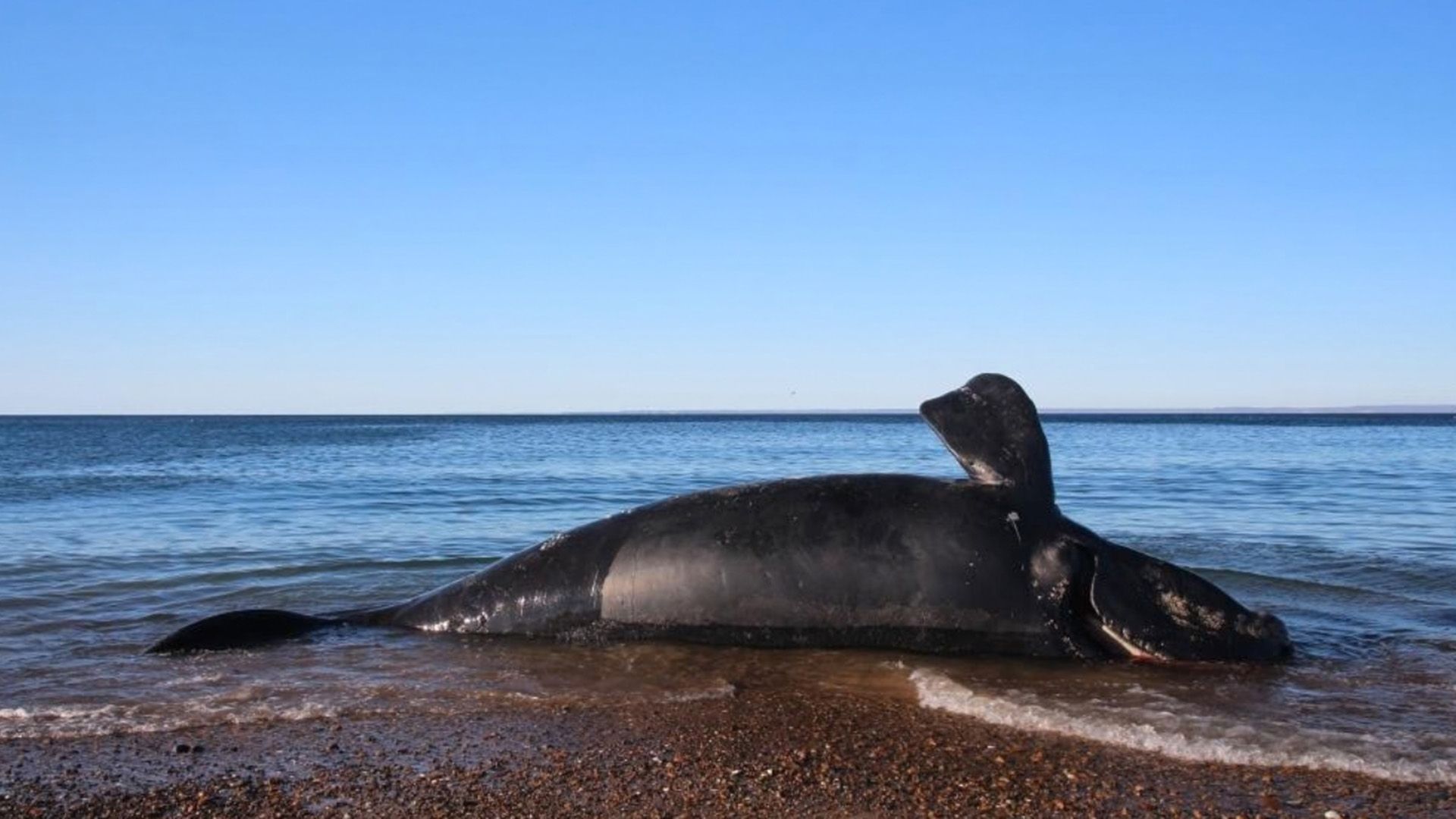
Scientists are investigating an exceptional die-off of over 300 southern right whale calves in Argentina, linked to a bacterial infection.
Key facts
- •Over 300 southern right whale calves have died in Argentine Patagonia since June.
- •The deaths are linked to the bacterium Erysipelothrix rhusiopathiae, which causes the skin infection erysipelas.
- •The current mortality rate far exceeds the previous record of 113 calf deaths set in 2012.
- •Researchers are investigating whether kelp gulls are transmitting the bacteria through pecking wounds.
- •The bacterium can also infect humans, posing a potential risk to those in contact with carcasses or contaminated water.
More than 300 southern right whale calves have died in Argentine Patagonia since June, marking an exceptional mortality event. This figure significantly exceeds the previous record of 113 deaths documented in 2012. Researchers are currently working to determine why the bacterium Erysipelothrix rhusiopathiae, which is typically present in the environment, has triggered such a widespread infection this year.
By the numbers
Investigating the Bacterial Cause
Laboratory analyses have confirmed that the calves died from erysipelas, a skin infection caused by the bacterium E. rhusiopathiae. While this pathogen was first identified in the species in 2013, it is usually considered an opportunistic bacterium found in various animals and marine environments. In severe cases, the infection can enter the bloodstream and damage vital organs. Researchers are examining whether kelp gulls act as vectors for the disease. These birds have been known to peck at whale skin, potentially creating wounds that allow the bacteria to enter. However, scientists note that gull attacks have occurred for decades, suggesting that other environmental or biological shifts may be contributing to the current surge in mortality.
Environmental and Population Impact
Experts are investigating potential environmental triggers, such as changes in water temperature, salinity, or food availability, that might have altered the balance between the pathogen and the whales. While the long-term demographic impact remains uncertain, biologists warn that the loss of a significant portion of this year's calf cohort could affect future population numbers. Public health officials have also noted that E. rhusiopathiae can infect humans through skin wounds, advising caution regarding contact with whale carcasses or seawater in affected areas. The Southern Right Whale Health Monitoring Program is expected to release final figures in December.
Timeline
- 1970sAttacks by kelp gulls on southern right whales were first recorded at Península Valdés.
- 2012A record 113 southern right whale calves died, the highest number previously documented.
- 2013The bacterium E. rhusiopathiae was first identified in southern right whale calves.
- JuneThe first dead calves appeared on the beaches of Península Valdés at the start of the breeding season.
- SeptemberA survey conducted by CESIMAR's Marine Mammal Laboratory counted 409 calves among 1,375 whales.
Advertisement
This article was independently rewritten by ManyPress editorial AI from reporting originally published by Live Science.