Scientists at Queen's University Belfast have created a low-cost, 3D-printed iron-based flow battery and are sharing the design globally to standardize renewable energy research.
Key facts
- •The 3D-printed battery design uses iron, which is more accessible than the vanadium typically used in flow batteries.
- •The cost to produce the 3D-printed cell is approximately £74.
- •Researchers at Queen's University Belfast are providing the design and assembly instructions to the global scientific community for free.
- •The project aims to standardize research results by allowing different institutions to use identical equipment.
- •The team is currently testing larger stacks of the printed cells to evaluate their potential for industrial application.
Researchers at Queen's University Belfast have developed an affordable, 3D-printed flow battery that uses iron instead of the typically expensive and scarce element vanadium. By providing the design and assembly instructions to the international research community for free, the team aims to standardize testing and accelerate the development of renewable energy storage technologies.
By the numbers
Addressing cost and standardization
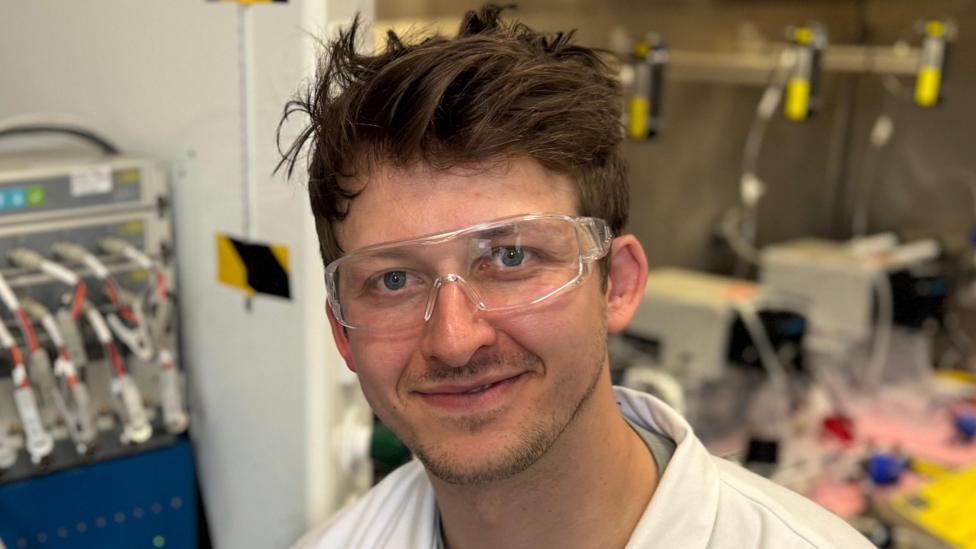
Flow batteries are considered essential for storing renewable energy when wind and solar power are unavailable. However, their development has been hindered by high costs and the reliance on vanadium, which is difficult to source. Post-doctoral researcher Dr. Hugh O'Connor developed the 3D-printed iron-based cell after finding that existing research equipment was prohibitively expensive, often costing between £2,000 and £3,000. To overcome inconsistencies in global research results, the team decided to release their design—which costs approximately £74 to produce—to other institutions. The kit includes roughly ten components and is accompanied by an instruction manual to ensure researchers can replicate experiments using identical equipment.
Scaling for industry
Dr. Josh Bailey, an Illuminate Fellow at the university, is leading studies across multiple global institutions to test the technology. The team is now working on scaling up the printed cells into larger stacks to determine how the technology can be applied to industrial-scale energy storage. This progress is viewed as a necessary step toward meeting net-zero goals, as improved storage could prevent the need to switch off wind turbines during periods of low demand.
Advertisement
This article was independently rewritten by ManyPress editorial AI from reporting originally published by BBC Science & Environment.