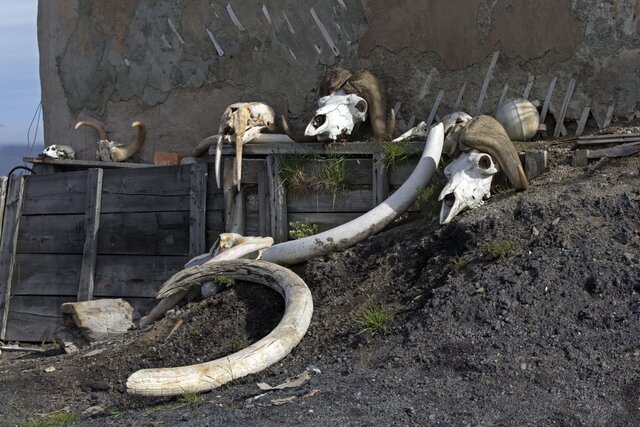
Following China's 2017 ban on elephant ivory, demand for mammoth tusks has surged, driving hunters into the Siberian permafrost to extract remains of the extinct animals.
Key facts
- •Researchers estimate that 10 million mammoth carcasses may remain in the permafrost, with potential tusk stocks reaching half a million metric tons.
- •Mammoth tusks are considered a legal alternative to elephant ivory because they do not require the killing of living animals.
- •The majority of Russian mammoth tusks are shipped to China and Hong Kong, which host the world's largest tusk-carving industry.
- •Hunters must transport fuel and supplies over 1,000 kilometers from Yakutsk to reach their hunting grounds in the Arctic districts.
- •Indigenous legends describe the mammoth as a creature that shaped the land, often warning against disturbing its remains.
Since China banned elephant ivory imports in 2017, the market for "ethical" mammoth ivory has grown significantly. Hunters in Russia's Yakutia region search the thawing permafrost for tusks from mammoths that died thousands of years ago. These tusks are primarily exported to China and Hong Kong, where high-grade ivory can fetch up to $1,900 per kilogram.
By the numbers
The Search for Ice Ivory
Northern Yakutia supplies approximately 80 percent of the mammoth tusks on the global market. Hunters, often working in crews of three to five, spend the summer season from June to October searching riverbanks and ravines for remains exposed by erosion. The work is physically demanding and financially risky, with some hunters investing heavily in equipment and travel only to find nothing.
Grading and Economic Value
Tusks are graded based on their condition. Top-grade ivory, known as pervach, can earn hunters 40,000 rubles (about $485) per kilogram. Second-grade tusks, which have cracked from sun exposure, sell for roughly 15,000 rubles ($180) per kilogram, while fragmented pieces known as shchepa sell for about 5,000 rubles ($60) per kilogram. Once exported to China and Hong Kong, the value of top-grade ivory increases significantly.
Cultural and Spiritual Beliefs
For many Indigenous peoples in the region, including the Yukaghir, the mammoth is a figure of legend and spiritual significance. Traditional beliefs often associate the animals with the underworld and warn that disturbing their remains can bring curses or misfortune. Modern hunters often perform a ritual known as sir belege, offering beads to the earth to thank the spirits for the materials found.
Advertisement
This article was independently rewritten by ManyPress editorial AI from reporting originally published by Meduza (English).