Data from the EU's Copernicus programme identified Torfaen as a global hotspot for wildfire-related carbon emissions in July.
Key facts
- •The Copernicus Atmosphere Monitoring Service described the emissions in Torfaen as "extremely unusual."
- •Smoke from the fires was reported as far away as Cardiff, approximately 30 miles (48km) from the site.
- •Torfaen council confirmed its own monitoring showed elevated particulate concentrations during the wildfire period.
- •Councillor Janet Jones reported no immediate surge in GP visits for respiratory issues as of two weeks ago.
- •The fire on Mynydd Garnclochdy was part of a series of regional blazes that necessitated military support.
A county in Wales experienced some of the world's highest carbon emissions per square kilometre in July due to wildfires. Data from the European Union's Copernicus earth observation programme ranked Torfaen behind only Malanje in Angola, Ávila in Spain, and Annaba in Algeria for wildfire emissions during that month.
Impact of the Mynydd Garnclochdy fire
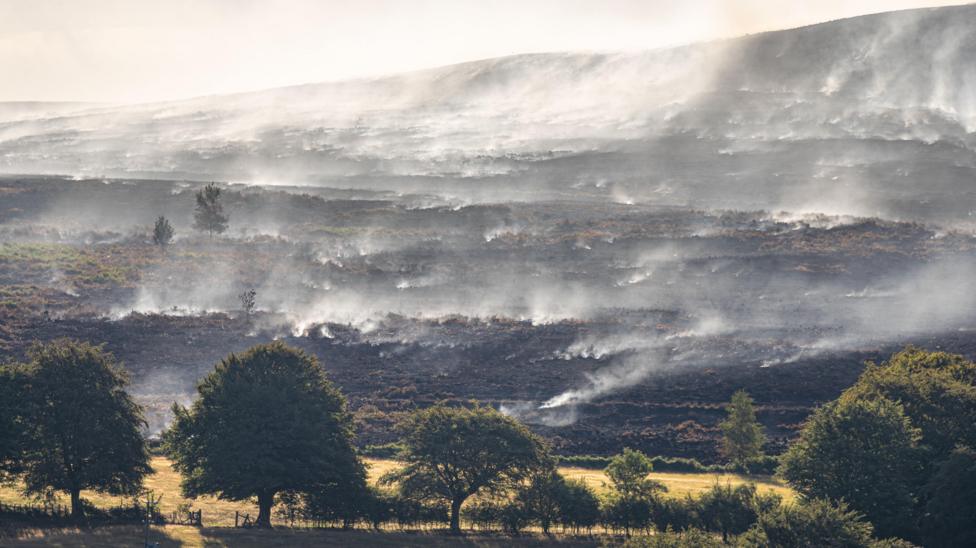
A fire covering an area roughly the size of 300 football pitches occurred on Mynydd Garnclochdy, located between Abersychan and Blaenavon. The fire service described the blaze as one of the most challenging in south Wales in recent years, and the incident eventually required military assistance after being declared a major incident alongside other regional fires.
Health and air quality concerns
Councillor Janet Jones noted that smoke was particularly severe on August 13, approximately three weeks after the fire began. Concerns have been raised regarding the impact on elderly residents and those with respiratory conditions like emphysema and COPD. Save the Children Wales expressed concern over the health consequences for children, noting that smoke exposure can limit outdoor activity and affect developing lungs.
Council response to data
Torfaen council stated it was unaware of the Copernicus research and questioned the evidence used to reach the findings. While the council acknowledged that prolonged wildfires can affect air quality, it noted that its monitoring station in Croesyceiliog Cwmbran is designed for general background air quality rather than measuring conditions immediately adjacent to fire sites.
Timeline
- JulyWildfires occurred in Torfaen, leading to high carbon emission levels.
- 13 AugustCouncillor Janet Jones reported that smoke levels were particularly bad.
- Two weeks agoCouncillor Jones spoke with GP practice nurses regarding potential increases in respiratory complaints.
Advertisement
This article was independently rewritten by ManyPress editorial AI from reporting originally published by BBC Science & Environment.