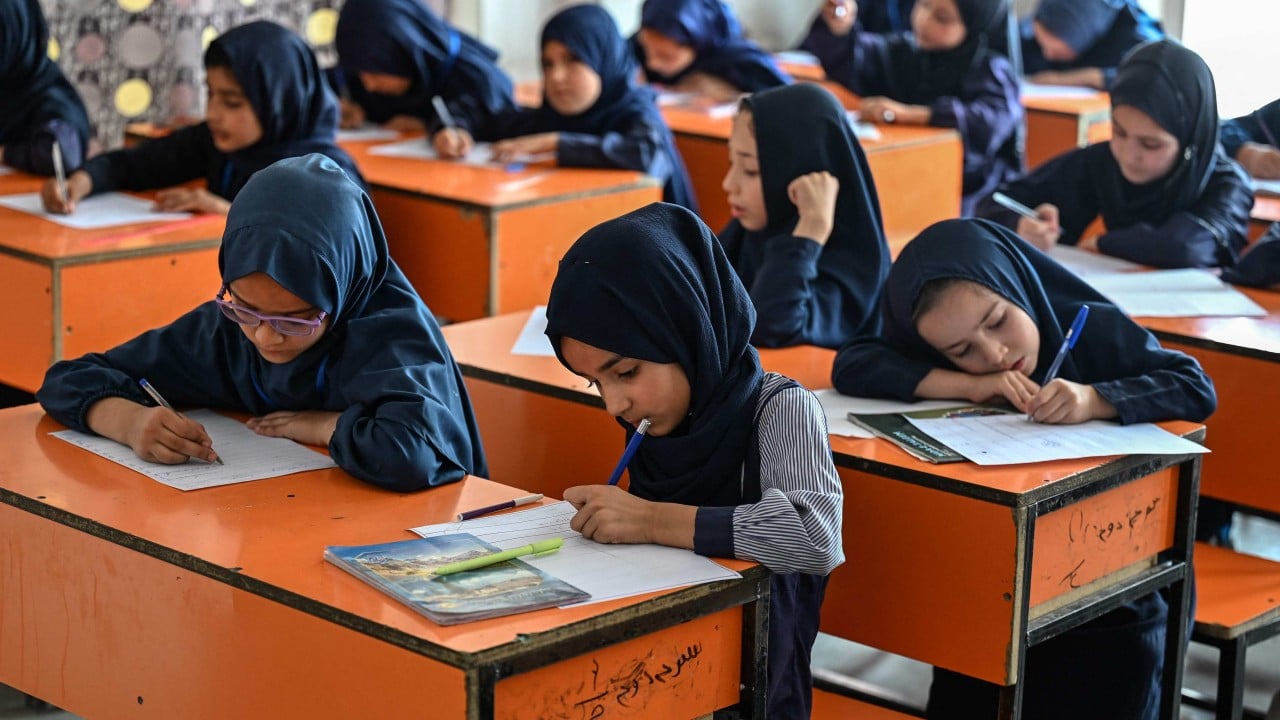
The United Nations reports that 2.4 million Afghan girls have been barred from secondary school since the Taliban returned to power in 2021.
Key facts
- •The number of girls denied secondary education has risen by 200,000 since last year.
- •Unesco estimates that up to four million girls could be out of school by 2030 if the ban persists.
- •The Taliban government officially barred girls from secondary schools in March 2022.
- •The Taliban administration is currently recognized solely by Russia.
- •Restrictions on women also include bans on university attendance, public parks, gyms, and beauty salons.
The United Nations stated on Tuesday that 2.4 million girls in Afghanistan have been denied access to secondary education since the Taliban regained power in 2021. Unesco, the UN’s education and heritage body, condemned the restrictions as discrimination and called for the immediate restoration of educational rights for women and girls.
By the numbers
Scope of Educational Restrictions
The Taliban administration currently prohibits girls from studying beyond primary school, citing an interpretation of Islamic law. Since the ban on secondary schools was implemented in March 2022, the number of girls excluded from education has increased by 200,000 compared to last year. Unesco projects that if these policies continue, the number of girls denied schooling could reach nearly four million by 2030.
Broader Restrictions on Women
Beyond the school ban, the Taliban government has enacted various restrictions on women, including prohibitions on attending universities, visiting public parks, using gyms, and entering beauty salons. The United Nations has described these measures as 'gender apartheid.' While the Taliban initially promised a softer approach upon retaking power in August 2021, these policies have remained in place.
Timeline
- August 2021The Taliban retook power in Afghanistan.
- March 2022Girls were officially barred from secondary schools.
- Late 2022Universities were closed to young women.
Advertisement
This article was independently rewritten by ManyPress editorial AI from reporting originally published by South China Morning Post.