Historian Peter Sahlins' new book examines how geopolitical events, cultural ideologies, and contemporary fears have shaped scientific and popular views of Neanderthal extinction.
Key facts
- •Peter Sahlins' book 'Neanderthals Among Us: The Making of a Prehistoric Human' was published by Oneworld Publications in 2026.
- •A 2024 study of a 50,000-year-old viral genome confirmed that Sapiens-borne pathogens were passed to Neanderthals.
- •The Campanian Ignimbrite eruption near Naples, Italy, is dated to around 39,280 BP with a margin of plus or minus 110 years.
- •A severe cooling event during the Middle Palaeolithic began around 41,000 years ago and lasted for six centuries.
- •Zoologist Clive Finlayson argued that the last Neanderthal at Gibraltar could be found as late as 29,000 years ago.
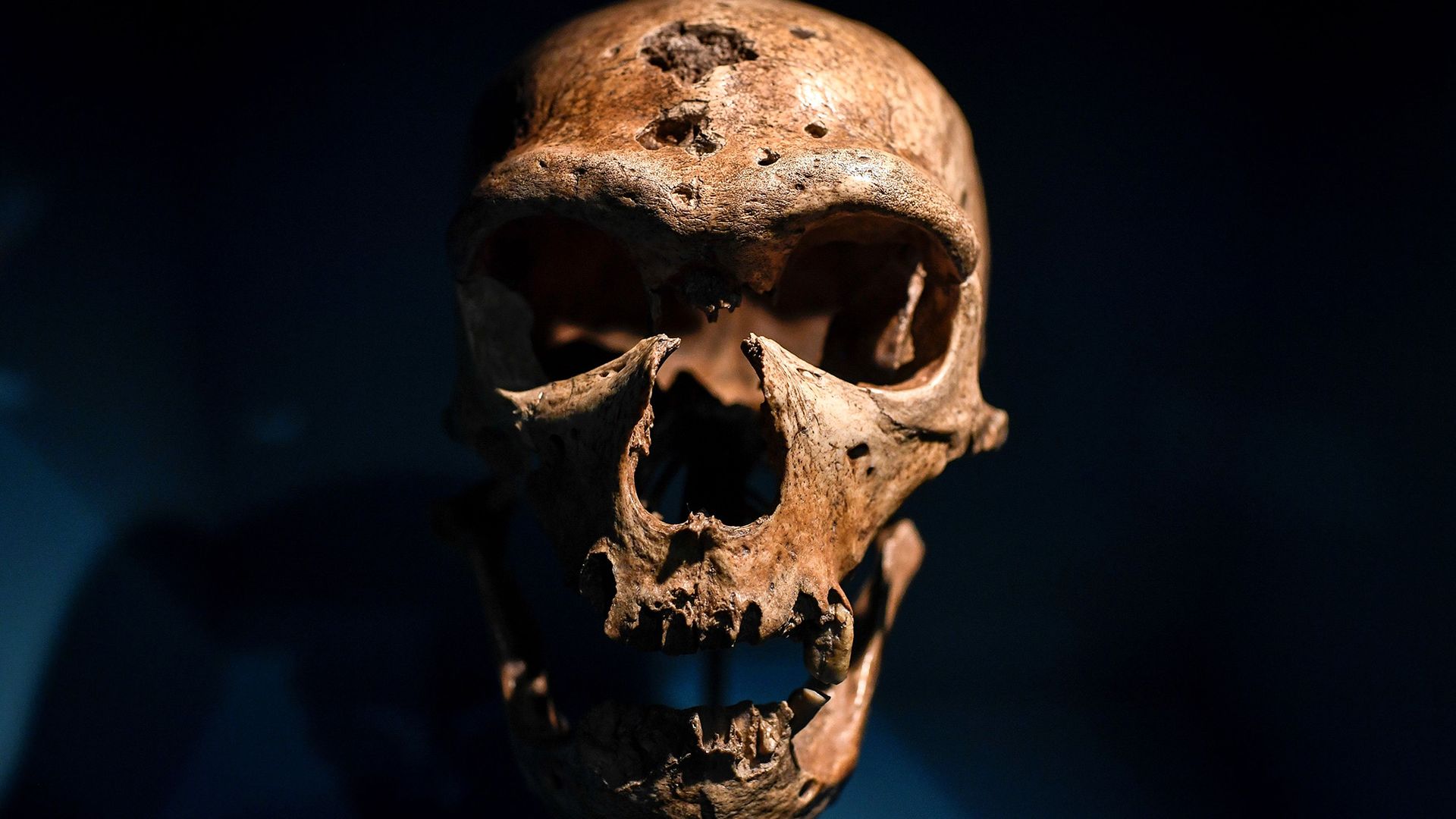
In his new book 'Neanderthals Among Us: The Making of a Prehistoric Human,' historian Peter Sahlins explores how human views of Neanderthals have been shaped by cultural and political ideologies. Across popular media and scientific research, theories regarding Neanderthal extinction often reflect contemporary anxieties, ranging from immigration and pandemics to climate change and technological innovation.
By the numbers
Reflecting Modern Concerns in Media and Disease
Media outlets have frequently translated technical archaeological studies into headlines reflecting contemporary social anxieties. For instance, the Glasgow Herald on July 29, 2011, ran the headline 'Immigrants Halt Neanderthal Era,' reinterpreting Cambridge archaeologist Paul Mellars' study on Upper Palaeolithic population increases. Similarly, the pathogen thesis gained prominence following the COVID-19 pandemic, supported by a 2024 study on a 50,000-year-old herpes genome indicating that Sapiens-borne pathogens infected Neanderthals who lacked immunities.
Climate Change and Survival Theories
Over the past twenty years, climate change has increasingly been cited as a primary cause of Neanderthal extinction. Researchers have pointed to events such as the Campanian Ignimbrite eruption near Naples, Italy, dated to around 39,280 BP, and a severe cooling event lasting six centuries around 41,000 years ago. These environmental shifts reduced vegetation and herbivore food sources, driving Neanderthals toward warmer refugiums like Gibraltar and southern Spain, where researchers like Clive Finlayson have tracked late Neanderthal presence.
Conservatism Versus Innovation
Some climate-focused theories suggest that Neanderthals struggled to survive severe conditions because they were not a cold-adapted species, lacked complex clothing technologies, or displayed technological inertia and deep conservatism. Philip Lieberman's 2013 book 'The Unpredictable Species' argues that humans survived through innovation while Neanderthals perished due to conservatism. Sahlins notes that this emphasis on innovation mirrors contemporary neoliberal values, tracing the concept of indigenous and ancient conservatism back to 19th-century anthropologists like Augustus Pitt Rivers and E.B. Tylor.
Timeline
- 29 July 2011The Glasgow Herald published a report with the headline 'Immigrants Halt Neanderthal Era.'
- 2023Jonathan Kennedy published the world history 'Pathogenesis,' and Ludovic Slimak published an account of research in the Mandrin Cave.
- 2024A study analyzed a 50,000-year-old case of herpes in a sequenced viral genome.
- 2026Peter Sahlins published 'Neanderthals Among Us: The Making of a Prehistoric Human.'
Advertisement
This article was independently rewritten by ManyPress editorial AI from reporting originally published by Live Science.