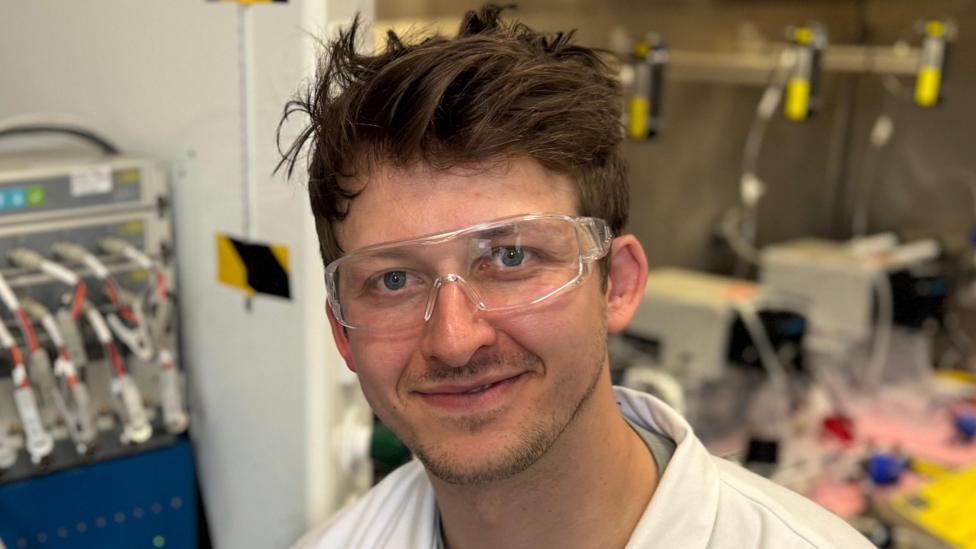
A University of Sydney PhD student has synthesized carbon-rich cosmic dust in a laboratory, providing new insights into the chemical precursors of life.
Key facts
- •Linda Losurdo and Professor David McKenzie conducted the experiment at the University of Sydney.
- •The process involved applying 10,000 volts of electricity to a mixture of nitrogen, carbon dioxide, and acetylene.
- •The laboratory-produced dust contains CHON molecules, which are critical components for organic substances.
- •The study's findings were published in The Astrophysical Journal of the American Astronomical Society.
- •The research received funding from the Australian Research Council.
Linda Losurdo, a PhD candidate at the University of Sydney, has successfully synthesized cosmic dust by recreating space-like conditions inside a laboratory. By exposing a mixture of nitrogen, carbon dioxide, and acetylene to high-voltage electrical charges, researchers produced carbon-rich material that mirrors the composition of dust found in interstellar space. These findings, published in The Astrophysical Journal, offer a new method for studying the chemical pathways that may have delivered organic ingredients to early Earth.
Simulating Cosmic Environments
To replicate the conditions of space, researchers used a vacuum pump to remove air from glass tubes before introducing specific gases. The mixture was then subjected to an electrical potential of approximately 10,000 volts for about one hour, creating a plasma state known as a glow discharge. This intense energy broke down the initial molecules, allowing them to recombine into complex structures that settled as a thin coating of dust on silicon chips. The resulting laboratory samples exhibit infrared signatures that match those observed in space by astronomers. These signatures serve as molecular fingerprints, confirming that the experiment accurately simulates the processes occurring in cosmic nurseries and near dying stars.
Implications for Life's Origins
The synthesized dust contains CHON molecules—combinations of carbon, hydrogen, oxygen, and nitrogen—which are essential building blocks for organic life. Scientists have long debated whether the organic material necessary for life on Earth originated on the planet or was delivered by meteorites and comets during the solar system's formation. By recreating these materials, researchers can now study the specific chemical conditions that lead to the formation of complex organic structures. The research team plans to develop a comprehensive database of infrared fingerprints from various types of laboratory-made dust. This resource will allow astronomers to compare laboratory data with observations of star-forming regions, helping to identify where specific cosmic materials are produced and how they evolve throughout their journeys in space.
Advertisement
This article was independently rewritten by ManyPress editorial AI from reporting originally published by ScienceDaily.